





How to Find Sales Opportunities Inside the SAP SuccessFactors Installed Base
Identify sales opportunities in the SAP SuccessFactors installed base using technographics, buying signals, business changes, and tech intelligence.
By Olivia Thomas, Director of Growth Marketing & Sales at Data InfoMetrix
Knowing that a company uses SAP SuccessFactors gives you a starting point, not a sales opportunity.
The real opportunity emerges when something around the platform starts to change. A new integration, an expanding data environment, a workforce technology shift, a broader SAP transformation, or a modernization initiative can reveal where an account may be heading next.
The goal isn’t to assume that every technology change means a purchase is coming. It is to identify the signals that make an account worth investigating.
Here are five signals you can use to identify which SAP SuccessFactors customers are worth pursuing, what those signals could mean, and who should investigate them.
Let’s dive in!
Five Signals That Reveal Sales Opportunities Inside SAP SuccessFactors Accounts
1. New Add-Ons Can Signal Integration Opportunities
SAP SuccessFactors rarely operates alone. Enterprise HR environments often connect with platforms such as MuleSoft, Boomi, Informatica, and Workato, alongside payroll, analytics, and business applications.
For integration vendors, systems integrators, SAP partners, and consultants, these additions can provide an important qualification signal.
According to MuleSoft's 2024 Connectivity Benchmark Report, many enterprises still struggle to connect applications, data, and AI initiatives across increasingly complex technology environments.
For SAP SuccessFactors accounts, that complexity can become a sales opportunity when the surrounding integration environment starts changing. Rather than treating the presence of middleware or connected applications as proof of an active project, look for signs that the organization is:
- Connecting more HR and business applications
- Expanding workforce data flows
- Replacing point-to-point integrations
- Standardizing its integration architecture
These changes can indicate that an organization is addressing integration complexity at a broader level, creating potential opportunities for integration, data, and enterprise software vendors.
The stack itself does not confirm a project. It simply tells you where to look for the business change behind the technology.
2. Data and AI Investments Can Signal Workforce Intelligence Opportunities
A SuccessFactors environment connected to Snowflake, BI & analytics, Microsoft Fabric, or AI technologies may indicate that workforce data is becoming part of a broader business strategy.
This matters because workforce data increasingly supports planning, forecasting, skills development, productivity analysis, and employee experience initiatives.
McKinsey's State of AI research reports that 47% of large organizations are scaling AI adoption. At the same time, Deloitte's 2025 Global Human Capital Trends highlights the growing connection between workforce strategy, technology, skills, and business performance.
That makes changes in the surrounding workforce data and AI environment worth watching, such as:
- Expanding workforce analytics
- Building AI-enabled HR processes
- Improving planning and forecasting
- Centralizing workforce data
SuccessFactors tells you where HR data lives. The surrounding data stack can reveal how that data may be used next.
3. HR and Legacy SAP Changes Can Signal Modernization Opportunities
Instead of treating workforce and legacy SAP technologies as two separate signals, look at both as indicators of technology change.
A SuccessFactors customer using ADP, Dayforce, Paylocity, or Workday for payroll, recruiting, workforce management, learning, or employee experience, alongside older SAP technologies, may be evaluating consolidation, replacement, migration, or modernization initiatives.
For HR technology vendors, SAP partners, cloud providers, migration firms, and transformation consultancies, look for signs such as:
- Platform replacement or consolidation
- Payroll or HR modernization
- Legacy SAP migration
- Cloud adoption
- Infrastructure changes
- Broader application transformation
The opportunity lies in the change, not simply in finding an old or complex technology stack.
4. Broader SAP Adoption Can Signal Transformation Opportunities
SuccessFactors becomes more commercially interesting when it appears alongside technologies such as SAP S/4HANA ERP, SAP Finance, SAP Business One, SAP Commerce Cloud, or SAP Enterprise Suite.
For SAP partners, implementation firms, consultants, and integration providers, this often signals that HR technology is connected to a larger enterprise application strategy.
The key question is:
“What broader transformation initiative connects these systems?”
Potential opportunities may include:
- SAP implementation programs
- Process modernization
- Cross-platform integration
- Enterprise architecture projects
- Digital transformation initiatives
SuccessFactors may be the entry point, but the broader SAP ecosystem often reveals the larger opportunity.
5. Business Changes Can Signal Timely Opportunities
Technographics become more powerful when combined with business context.
Consider accounts showing combinations such as:
- SuccessFactors + new technology adoption + IT hiring
- SuccessFactors + workforce expansion + HR hiring
- SuccessFactors + M&A activity + systems consolidation
- SuccessFactors + cloud investment + modernization efforts
Technology data tells you what is installed. Business signals help indicate whether something may be happening now.
This combination helps sales and marketing teams prioritize accounts based on timing rather than technology fit alone.
How Sales and Marketing Teams Can Act on These Signals
Most teams make the mistake of treating every SAP SuccessFactors customer as an equal prospect.
A better approach is to build priority tiers.
Start with your SAP SuccessFactors installed base, then segment accounts based on the five signals above:
- Monitoring Group: Accounts showing only platform usage belong in a monitoring group.
- Targeted Campaigns: Accounts showing one meaningful signal should move into targeted campaigns.
- Active Sales Priorities: Accounts showing multiple technology and business signals should become active sales priorities.
Next, build messaging around the likely initiative behind the signal.
A company adopting integration platforms may need application connectivity expertise. A company expanding workforce analytics may respond better to conversations around data strategy, AI, or workforce intelligence.
Finally, identify the stakeholders most connected to the change. Depending on the opportunity, that could include CHROs, CIOs, HR technology leaders, enterprise architects, IT leaders, data executives, or transformation teams.
The goal is not to predict a purchase. It is to identify accounts where a relevant business conversation is becoming more likely.
Skip the Manual Work. Target the Right Accounts.
No time to build an SAP SuccessFactors installed base and enrich it with technographic, buying signal, and contact intelligence? Get ICP-ready accounts already aligned to your specific targeting criteria.
Get Your Custom List Today!Final Thoughts
The value of the SAP SuccessFactors installed base is not simply knowing which companies use the platform.
The bigger opportunity comes from understanding what surrounds it and what is changing around it.
Integration expansion, data and AI investment, workforce technology changes, broader SAP adoption, and business developments can all provide useful clues. None guarantees a purchase, but together they help identify accounts where a relevant sales conversation may be more timely.
This is where Data InfoMetrix helps. By combining SAP SuccessFactors technographics with firmographic intelligence, buying signals, intent data, and decision-maker contacts, GTM teams can focus on the accounts most likely to deserve attention.
The goal is not to predict the next purchase. It is to recognize when the conditions for an opportunity are beginning to form.
Frequently Asked Questions
What is an SAP SuccessFactors installed base?
An SAP SuccessFactors installed base is a collection of companies currently using SAP SuccessFactors, enriched with firmographic, technographic, contact, intent, and buying-signal intelligence.
How can you find sales opportunities among SAP SuccessFactors customers?
Look beyond platform usage. Combine technographics with surrounding technologies, business changes, intent signals, and decision-maker data to identify accounts that may have emerging needs.
What technologies should you look for around SAP SuccessFactors?
Common technologies include integration platforms, analytics tools, AI technologies, payroll systems, workforce applications, cloud platforms, and broader SAP products such as SAP S/4HANA ERP and SAP Finance.
How do SAP SuccessFactors technographics help with prospecting?
Technographics provide context about the technologies surrounding an account. This helps teams segment audiences, prioritize opportunities, and align outreach with likely business initiatives.
Which decision-makers should you target at SAP SuccessFactors accounts?
Depending on the opportunity, relevant stakeholders may include CHROs, CIOs, HR technology leaders, IT leaders, enterprise architects, data executives, and transformation teams.
 Written byOlivia ThomasDirector of Growth Marketing & Sales
Related articles
Salesforce Is Buying Braze. What Happens to 2,770 Customers in the Meantime?
Salesforce announced an agreement to acquire Braze for $5.66B. Explore what happens to 2,770 Braze customers, why ownership changes reopen tech renewals, and how GTM teams can navigate the window.
Olivia Thomas · 6 min read
Inside the 2026 Executive Research Series: Announcing 4 Comprehensive eBooks and 4 Empirical Whitepapers on B2B Installed Base Intelligence
Data InfoMetrix releases its landmark 2026 Executive Research Series: 4 tactical eBooks and 4 empirical Whitepapers providing research-backed benchmarks on technographic data decay, legacy migration cycles, and account selection.
Olivia Thomas · 9 min read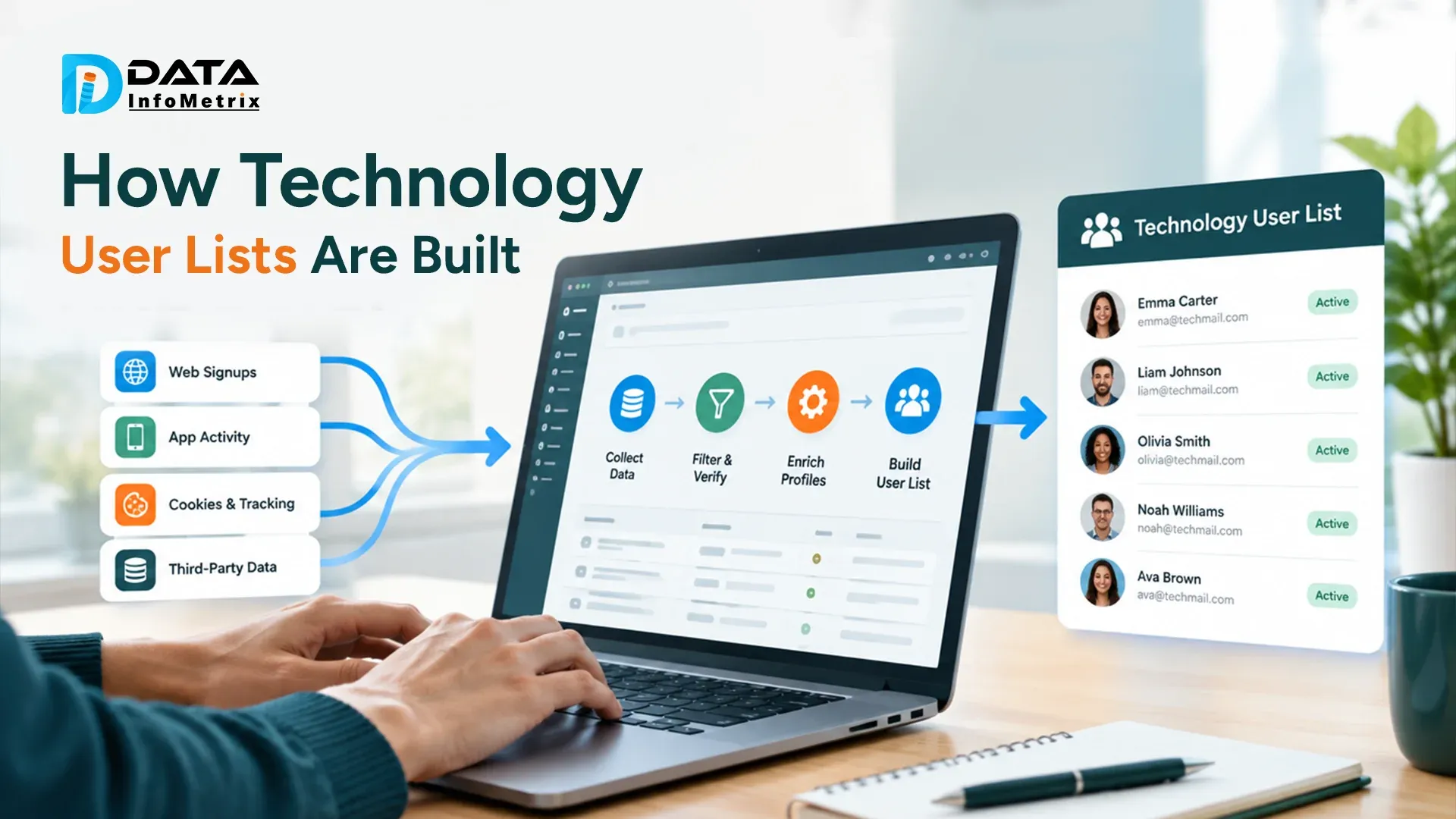
How Data InfoMetrix Builds and Delivers a Technology Users Email List
Learn how Data InfoMetrix builds technology users email lists using technographics, business signals, verification, and market intelligence.
Olivia Thomas · 4 min read