




The SAP ECC Deadline Is 14 Months Away: How Implementation Partners Find the Companies That Haven't Moved
SAP ECC mainstream maintenance ends December 31, 2027, and thousands of companies still haven't moved. Olivia Thomas on how implementation partners can find those accounts and get on the shortlist first.
By Olivia Thomas, Director of Growth Marketing & Sales at Data InfoMetrix
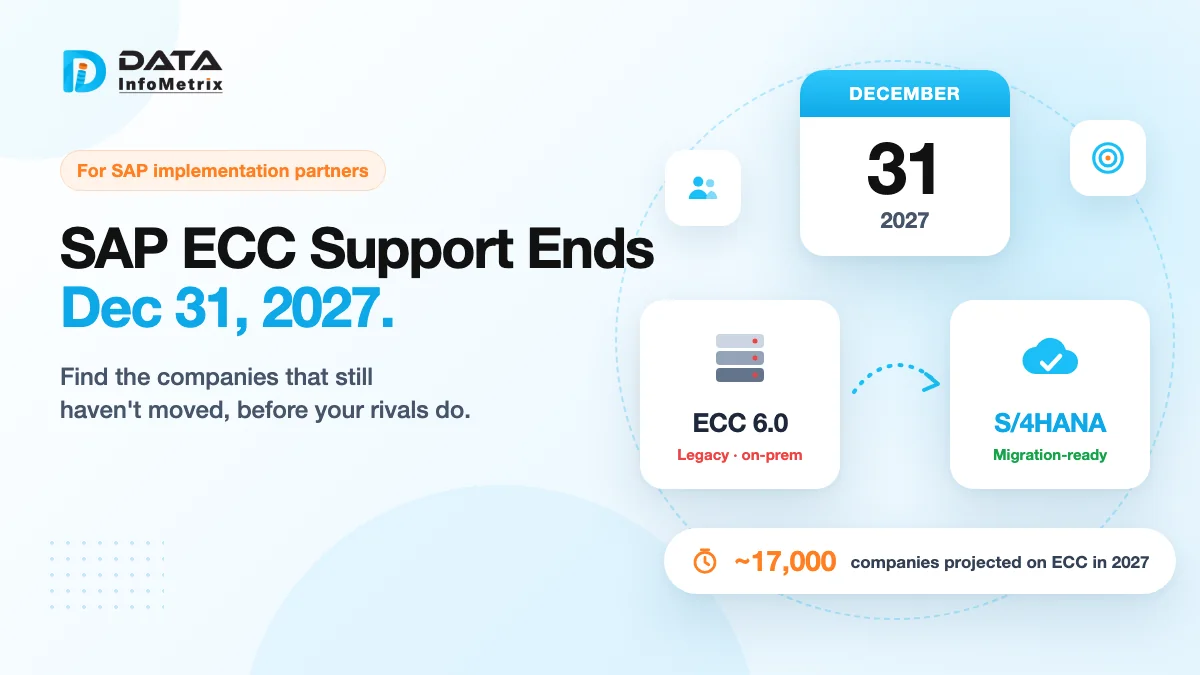
The short answer: SAP ECC 6.0 mainstream maintenance ends on December 31, 2027. Analysts expect roughly 17,000 companies to still be running ECC on that date. For implementation partners, the hard part isn't knowing those companies exist. It's knowing which ones run which version and modules, who owns the decision, and when they will pick a partner.
- Partners are chosen well before a project starts, so many of the decisions for 2027 are being made right now.
- A list that only says “uses SAP” can't tell an ECC holdout from a company already live on S/4HANA.
- The partners who win will target by version, module and buying committee, and start before the RFP goes out.
Every implementation partner I talk to says the same thing about the SAP ECC deadline. “Everyone knows it's coming.”
That's true. And it's exactly the problem. When every SAP partner in the market is chasing the same deadline, knowing it exists stops being an advantage. The advantage goes to whoever knows which companies are still exposed, and gets to them before the shortlist forms.
Today is November 5, 2026. The deadline is fourteen months away. Here's what that really means for partners, and how I'd go about finding the accounts that still haven't moved.
What actually ends on December 31, 2027
The dates are worth getting right, because prospects will test you on them.
Mainstream maintenance for SAP ERP 6.0 (ECC) on enhancement packages 6, 7 and 8 ends on December 31, 2027. Systems on older enhancement packages already lost mainstream maintenance at the end of 2025. After 2027, eligible customers can pay a premium for extended maintenance through 2030. SAP has also announced a transition option that runs from 2031 to 2033, but it comes with conditions. Customers must move to SAP ERP private edition and accept a narrower scope of support. SAPinsider has a clear breakdown of the 2027, 2030 and 2033 support dates if you want the detail.
So no, ECC doesn't stop working on January 1, 2028. But for most companies, staying put now costs more and gets them less support every year. That's what forces the decision.
Thousands of companies are still on ECC
The numbers here surprise people who assume the market has mostly moved.
According to Gartner, as reported by CIO in 2025, about 39% of SAP's roughly 35,000 ECC customers had moved to S/4HANA by the end of 2024. At that pace, Gartner projects that about 17,000 companies will still be running ECC in 2027, and about 13,000 in 2030. IDC and Forrester came to similar conclusions, putting the share still on ECC after 2027 at 40% or more.
More recent survey data points the same way. According to the DSAG, the German-speaking SAP user group, in its Investment Report 2026, only 37% of respondents investing in ECC want to switch to S/4HANA by the end of 2027. Almost half plan to switch by the end of 2030, which means paying for extended maintenance along the way.
For a partner, that's not a crowded, picked-over market. It's thousands of companies with a hard deadline, a growing support bill and, in many cases, no partner chosen yet.
Why “uses SAP” isn't a target list
This is where most migration campaigns go wrong.
A partner buys a list of “SAP users” and starts sending emails. The list mixes companies already live on S/4HANA, companies on SAP Business One (which has nothing to do with the ECC deadline), companies that only use SuccessFactors or Concur, and genuine ECC holdouts. The holdouts are the only ones that matter, and they might be a third of the file.
The result is predictable. Reply rates are low, SDRs spend their first call asking which SAP products the prospect runs, and the partner decides the market “isn't ready.” It's ready. The list just wasn't specific enough.
To build a migration campaign that works, you need to know at least three things about each account:
- Product and version. ECC, not just SAP. Ideally the enhancement package too, because companies on older ones are already outside mainstream support.
- Modules in use. A company running FI/CO only is a very different project from one running SD, MM, PP and a heavily customized warehouse setup.
- Migration status. Has the company already announced an S/4HANA program, signed RISE with SAP, or chosen a partner? If so, it belongs on a different list.
The signals that a company is getting ready to move
Version data tells you who is exposed. Signals tell you who is about to act. None of these is reliable on its own, but two or three together usually mean a decision is close.
Hiring for the new platform. Job posts for S/4HANA architects, SAP data migration leads or ERP program managers are one of the clearest signs. Companies don't hire a migration program manager unless a program is coming.
Leadership change. A new CIO or CFO in the past year often restarts an ERP decision that had been put off. New leaders want to set direction, and the ECC deadline gives them a reason.
Maintenance renewal timing. SAP maintenance contracts and internal budget cycles create natural decision points. Fiscal year planning for 2027 is happening now.
Adjacent projects. A new data warehouse, a move to the cloud for other systems or a finance transformation program often run alongside, or just before, an ERP move.
Long time on the current system. Companies that have run ECC for 15 years or more usually carry the most custom code, and the most reason to delay. They are also the ones that most need an outside partner.
Who to contact, and in what order
An ERP migration is not an IT purchase. It's a business decision that IT runs. If your list only reaches the SAP Basis team, you're reaching the people who will do the work, not the people who will sign the contract.
A migration buying committee usually includes:
- The CIO or VP of IT, who owns the program and the partner decision.
- The SAP center of excellence lead or ERP program manager, who knows the system best and will shape the requirements.
- The CFO or finance transformation lead, because finance is usually the first and most affected function.
- Procurement, who will run the partner selection.
- Supply chain and operations leaders, in manufacturing and distribution especially.
I'd start with the ERP program owner and the CIO, using practical content (a readiness checklist, a cost model for extended maintenance, a realistic timeline). Bring finance in early with the business case. Procurement comes in when the shortlist forms, and by then you want to be on it.
Why the timing is tighter than it looks
Fourteen months sounds like plenty of time. It isn't, for two reasons.
First, migrations take longer than planned. According to research from ISG, reported by The Register in February 2026, nearly 60% of SAP migration projects run late and over budget. Buyers who have read that research know a project starting in late 2027 won't finish in time. Many of them will move straight to extended maintenance, and that decision is being made now.
Second, partner selection happens well before the project starts. A company that wants to start a project in mid-2027 is choosing a partner in the next few months. If your first contact comes when the RFP is published, you're competing on price against firms the buyer has already been talking to for a year.
So the question for partners isn't whether there is demand before 2027. It's whether you'll be known to these accounts before they start shortlisting.
How I'd build an ECC target list
If I were running go-to-market for an SAP partner today, this is the order I'd work in.
1. Define the ICP first. Industry, company size, region and the kind of project you're best at. A partner strong in process manufacturing shouldn't be chasing retail ECC accounts in a market where it has no references.
2. Build the list on ECC specifically. Start from companies running ECC, not SAP in general, and remove accounts already live on S/4HANA or with an announced program and partner.
3. Add module and complexity detail. Segment by the modules in use and how long the company has been on ECC. This shapes both the message and the size of the deal.
4. Score by signals. Put hiring, leadership change and adjacent projects on top, so your team calls the accounts closest to a decision first.
5. Map the buying committee. Verified contacts for IT, the SAP program owner, finance and procurement, not just one name per account.
6. Run in waves. Start with accounts showing the strongest signals. Refresh the list every quarter, because companies leave the ECC pool every month as they choose partners and start projects.
How we build this at Data InfoMetrix
We don't sell a prebuilt SAP file. When a partner asks us for an SAP ERP users list, we build it around their ICP: ECC accounts by industry, size, region and modules in use, with accounts that have already moved removed. Our legacy modernization lists are sourced fresh for each order, which matters here more than almost anywhere else, because the ECC pool shrinks every month.
Every contact is SMTP-verified, with bounces and spam traps removed before delivery. We guarantee 99% email deliverability and replace every hard bounce one for one. And we map the full buying committee, not only the IT contact.
Our 238M+ installed base contacts give us the reach. Building the list around ECC specifically, rather than “SAP” in general, is what makes it useful for a migration campaign.
The question for your 2027 plan
The ECC deadline will create a lot of work for SAP partners over the next few years. That part is not in doubt.
The open question is which partners get it. The work will go to the firms that already have a relationship with the buyer when the decision is made, and for most companies, that's in the next few months.
Do you know which of the companies in your market are still on ECC, and do they know you?
Frequently asked questions
When does SAP ECC mainstream maintenance end?
Mainstream maintenance for SAP ERP 6.0 (ECC) on enhancement packages 6, 7 and 8 ends on December 31, 2027. Systems on older enhancement packages lost mainstream maintenance at the end of 2025. Eligible customers can buy extended maintenance through 2030, and SAP offers a conditional transition option from 2031 to 2033 for customers who move to SAP ERP private edition.
How many companies are still running SAP ECC?
Gartner estimated that about 39% of roughly 35,000 SAP ECC customers had moved to S/4HANA by the end of 2024, and projected that about 17,000 companies will still be on ECC in 2027 and about 13,000 in 2030. IDC and Forrester also expect 40% or more of ECC customers to remain on it after 2027.
Why is a general SAP users list not enough for an ECC migration campaign?
A general SAP list mixes companies already live on S/4HANA, SAP Business One users and companies that only use SAP cloud apps with real ECC holdouts. Implementation partners need lists built on ECC specifically, with modules in use and migration status, so outreach reaches only companies that still need to move.
What signals show a company is preparing to move off SAP ECC?
Common signals include job posts for S/4HANA architects or ERP program managers, a new CIO or CFO, upcoming maintenance or budget renewals, related projects such as a new data warehouse or finance transformation, and a long time on the current ECC system. Two or three signals together usually mean a decision is close.
Who should implementation partners contact at SAP ECC accounts?
The buying committee usually includes the CIO or VP of IT, the SAP center of excellence lead or ERP program manager, the CFO or finance transformation lead, procurement, and in manufacturing and distribution, supply chain and operations leaders.
Can Data InfoMetrix build a list of companies still on SAP ECC?
Yes. Data InfoMetrix builds custom SAP ERP users lists around your ICP, filtered by industry, company size, region and modules in use, with companies that have already moved removed. Contacts are SMTP-verified with a 99% deliverability guarantee and one-for-one replacement of every hard bounce.
 Written byOlivia ThomasDirector of Growth Marketing & Sales
Related articles
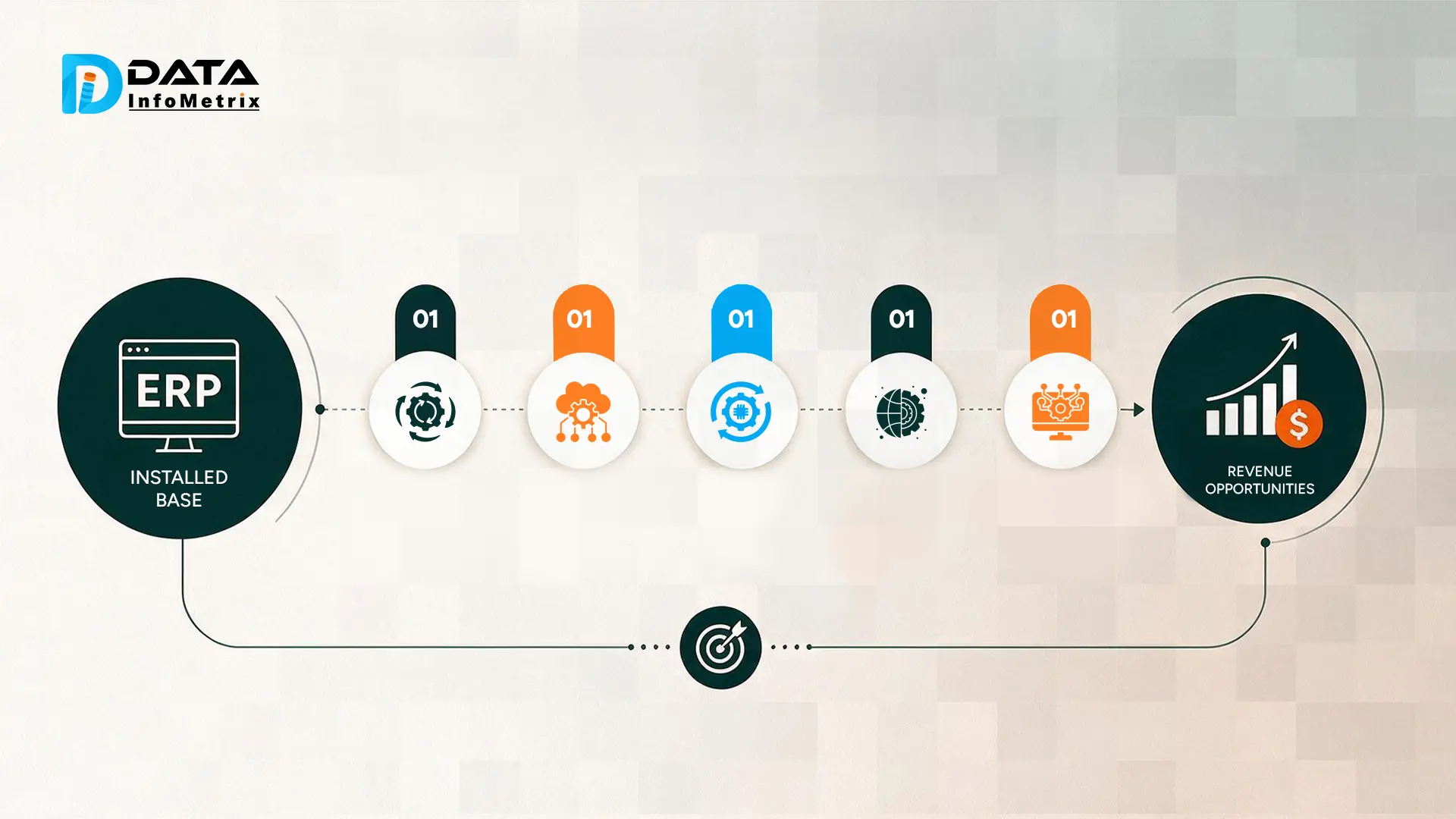
Five Shifts That Turn ERP Installed Base Into Revenue Opportunities
B2B marketers, RevOps teams, and growth managers selling into ERP accounts: your installed base hides pipeline. Here are 5 shifts to spot it.
Olivia Thomas · 9 min read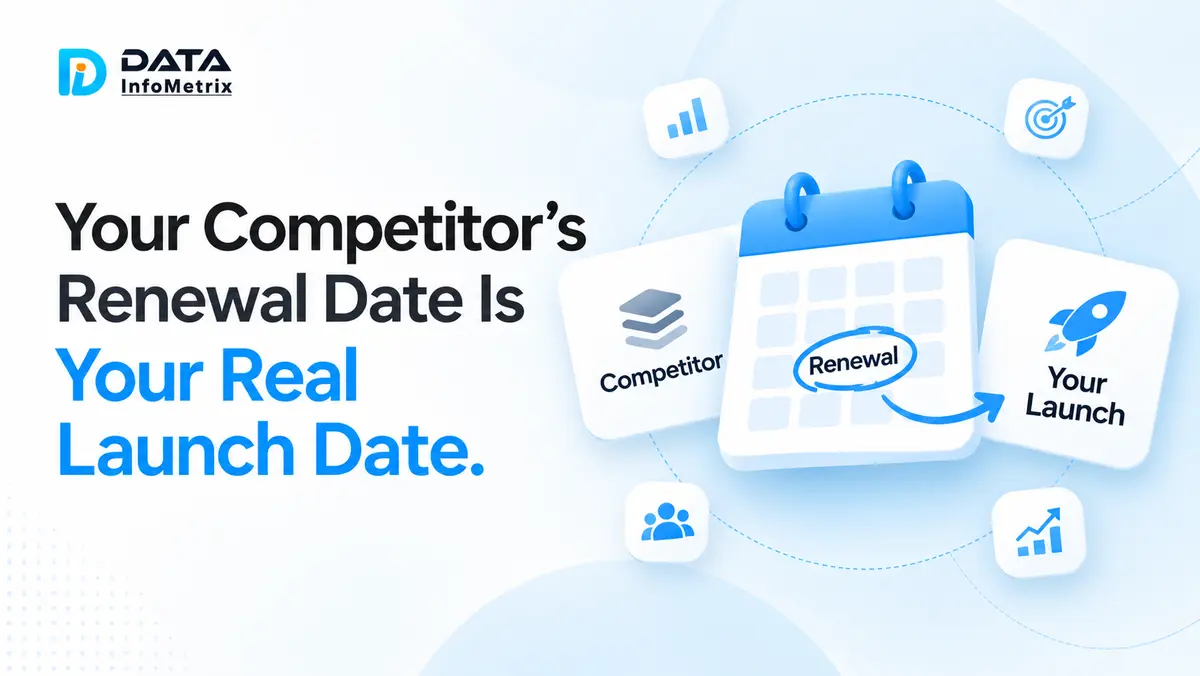
Your Competitor's Renewal Date Is Your Real Launch Date
Conquest campaigns fail when they ignore contract cycles. Olivia Thomas on why installed base timing, not messaging, decides who wins a competitor's users.
Olivia Thomas · 6 min read
Anthropic's IPO Filing Shows Who Is Buying AI. Here Is Who Should Be Calling Them.
Anthropic's S-1 puts hard numbers on enterprise AI adoption. For the vendors, integrators, and consultants built around that adoption, the real question is which accounts to reach first, and how to find them before a competitor does.
Olivia Thomas · 8 min read