




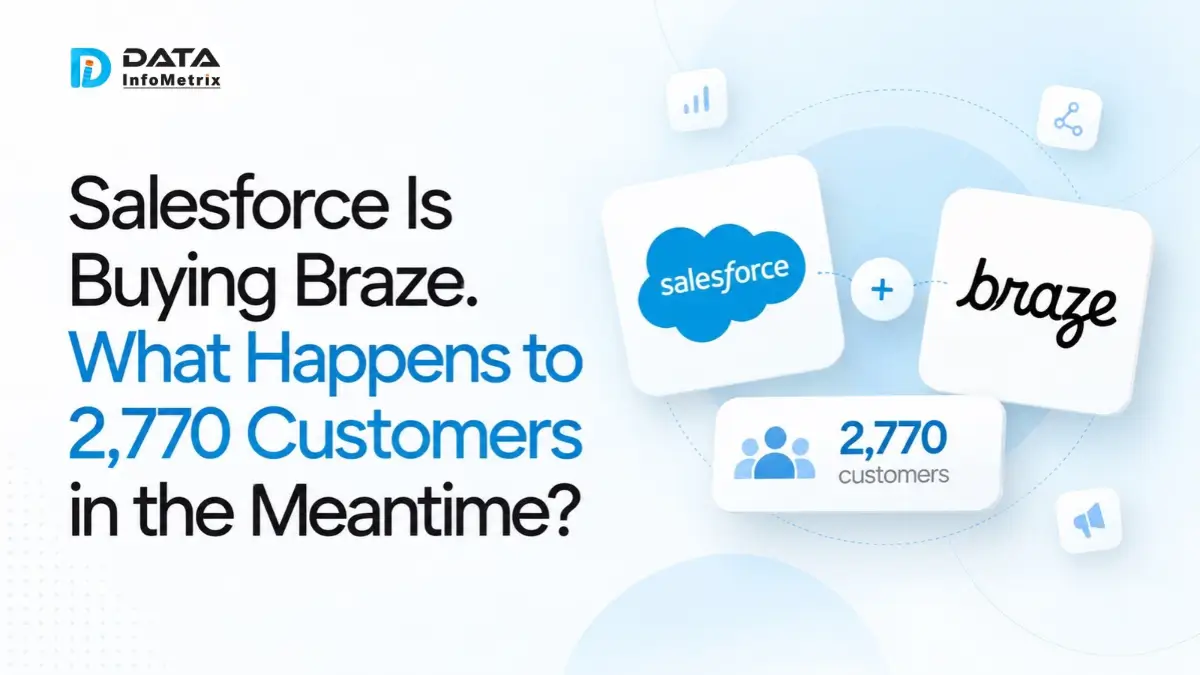
Salesforce Is Buying Braze. What Happens to 2,770 Customers in the Meantime?
Salesforce announced an agreement to acquire Braze for $5.66B. Explore what happens to 2,770 Braze customers, why ownership changes reopen tech renewals, and how GTM teams can navigate the window.
By Olivia Thomas, Director of Growth Marketing & Sales at Data InfoMetrix
I read the Salesforce announcement twice yesterday. Once as a marketer, and once as someone who has spent a long career watching what happens to a vendor's customers in the weeks after a deal like this is signed. The second read was the more interesting one.
Here is what was announced. On October 20, 2026, Salesforce said it had signed a definitive agreement to acquire Braze for approximately $5.66 billion in enterprise value, with Braze shareholders receiving $47.50 in cash per share. Braze serves about 2,770 customers, including Canva, Dairy Queen, Equinox, Instacart, Urban Outfitters and Venmo. The deal is expected to close in Salesforce's fiscal year 2028, subject to Braze shareholder approval and regulatory approvals. Nothing has closed yet. Braze's CEO, Bill Magnuson, said the company will keep building as Braze.
Salesforce's framing is about capability: real-time engagement and AI decisioning strengthening Marketing Cloud. That is a reasonable story for a press release. It is not the story I care about.
The customer list is the story
Every one of those 2,770 organizations now has a question it did not have last week. Will the roadmap change? Will pricing change? What happens to the contract renewal that is eight months out?
I have been on both sides of this moment: the vendor whose customers are asking questions, and the vendor trying to reach them. A few years back, a marketing automation company we worked with came to us the week a competing platform announced it was being acquired. They wanted to talk to that platform's users, and they wanted to do it fast. Their first instinct was a blast to every marketing leader in their database. We talked them out of it. A marketer who runs the acquired platform and a marketer who happens to work at a company of similar size are two completely different conversations. Only one of them has a reason to open your email.
That is the whole argument for installed base data. Not who fits a firmographic profile. Who is running the technology your offer relates to.
According to a survey by Gartner, in its 2023 CMO Spend and Strategy Survey of 405 marketing leaders, organizations used just 33% of their martech stack's capabilities on average, down from 42% in 2022, while spending 25.4% of their marketing budgets on technology.
A third. I have sat in renewal meetings where nobody in the room could name which features the team was actually using, and the conversation turned to price within ten minutes. Ownership changes tend to reopen exactly those meetings. A platform that was a safe default on Friday becomes a line item someone wants to justify on Monday.
Who should be paying attention
Braze's competitors are the obvious group. Anyone selling cross-channel engagement, mobile messaging or journey orchestration now has a window where Braze buyers are listening a little harder. The trap is the lazy pitch. “Braze is being acquired, so switch” is weak, and it is premature, since the deal is pending and plenty of Braze customers will be perfectly happy. The stronger message is about continuity, flexibility and what a buyer should ask during an integration period.
Implementation and advisory firms have a different opening. Some Braze customers will want an independent view of how their stack should look if Marketing Cloud becomes a more natural neighbor. Others will want help staying exactly as they are. Both groups need someone credible to talk to.
Then there are the vendors whose products plug into Braze, such as data tools, analytics and messaging add-ons. Salesforce and Braze both talked about an open, composable approach in the announcement. If that holds, integration partners benefit. If it does not, they are the first to find out. Either way, knowing which companies run Braze today is the starting point for any ecosystem play.
And one group people forget: companies that use both Braze and Salesforce. Mutual customers have the most at stake and the most opinions. They are also the hardest to find with a generic database, because “uses Salesforce” and “uses Braze” live in different corners of most datasets.
Why a generic list fails here
A standard B2B database can give you marketing directors at consumer brands with 500 to 5,000 employees. It cannot tell you which of them run Braze, which run something else, and which are mid-migration between the two. You end up sending a message about an acquisition to people who have never heard of the acquired product. Open rates look fine for a day. Pipeline never shows up.
This is the problem Data InfoMetrix was built around. We work in installed base data only, and every audience is custom researched around the client's ideal customer profile, sourced on demand rather than pulled from a static file. If a client wants Braze users in North American retail and subscription businesses, that is where the research starts. Contacts are verified through SMTP checks, spam trap removal and bounce reduction before anything is delivered. It sits on top of 70M+ Installed Base Contacts we have built across technology categories, but the project always begins with the ICP, not the database.
The outcome is simple to describe. Tighter targeting, so the message lands with someone who has a reason to care. Better conversion, because the relevance is built in. A faster route to pipeline in a window that will not stay open long, and campaign spend that goes to the right inboxes.
What I would do this week
Decide which of the conversations above you want to be in, then be realistic about timing. The deal is pending. Regulatory review and a shareholder vote are still ahead, and the close is expected well into next year. That is good news if you move early, because the audience is still reachable before every competitor and consultant crowds in.
Build the audience before you write the message. I have seen teams do it the other way around, spend three weeks on messaging, and then discover the list was the real constraint. Who on your team owns your list of Braze customers today? If the answer is “nobody,” that is your first meeting.
And ask yourself this. If a marketer at one of those 2,770 companies picked up the phone tomorrow and asked what you would do in their position, would you have a specific answer, or a brochure?
If you are evaluating accounts running the platform or planning a targeted outreach campaign, explore our verified Braze users email list to view current installed base coverage, decision-maker roles, and company intelligence across the ecosystem.
If you want to talk through a Braze users audience, or any other technology-specific audience built around your ICP, get in touch with the Data InfoMetrix team and we will walk you through how we scope it.
 Written byOlivia ThomasDirector of Growth Marketing & Sales
Related articles

Inside the 2026 Executive Research Series: Announcing 4 Comprehensive eBooks and 4 Empirical Whitepapers on B2B Installed Base Intelligence
Data InfoMetrix releases its landmark 2026 Executive Research Series: 4 tactical eBooks and 4 empirical Whitepapers providing research-backed benchmarks on technographic data decay, legacy migration cycles, and account selection.
Olivia Thomas · 9 min read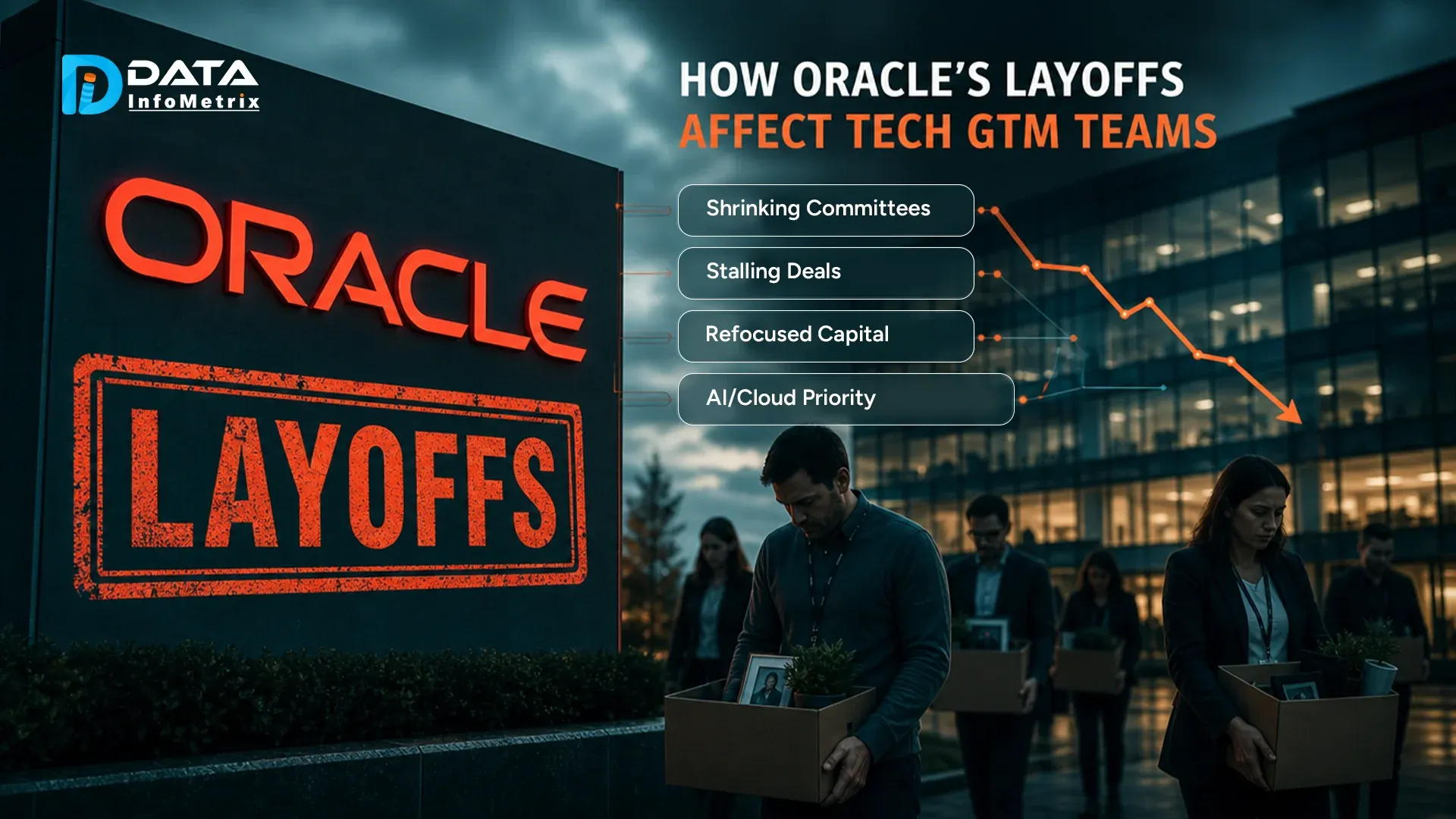
What Oracle’s 2026 Layoffs Mean for GTM Teams
Explore how Oracle’s 2026 layoffs reshape buying teams, capital priorities, sales cycles, and vendor strategies for technology companies selling to Oracle.
Olivia Thomas · 6 min read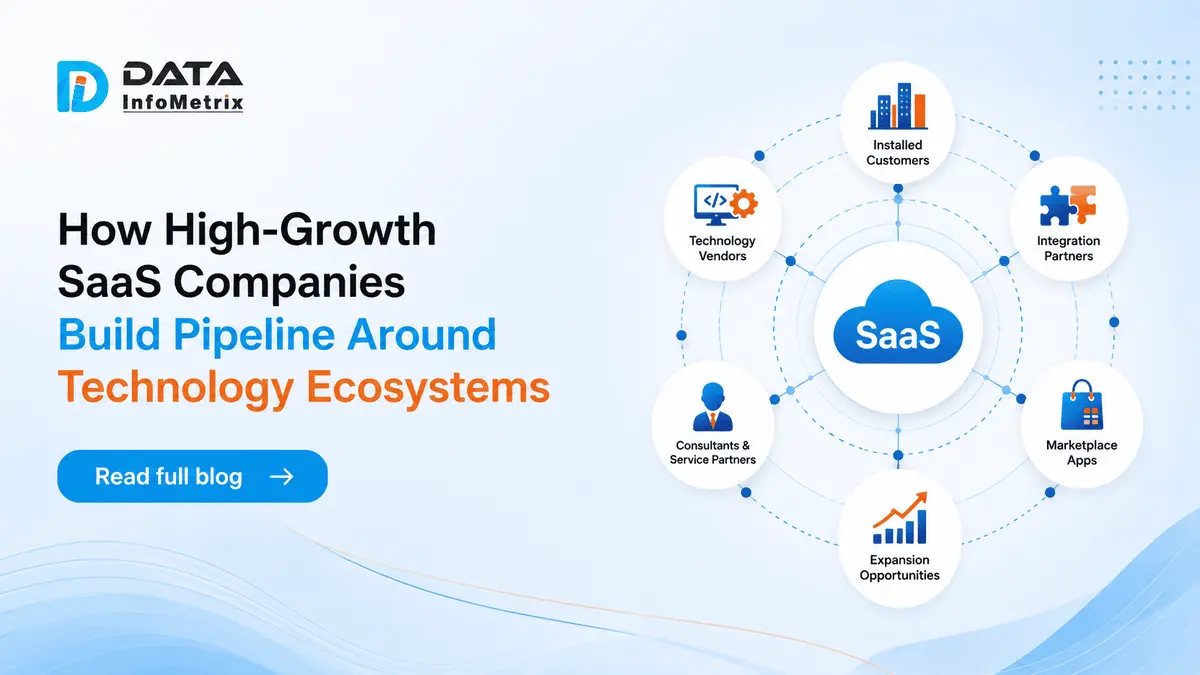
How High-Growth SaaS Companies Build Pipeline Around Technology Ecosystems
The targeting playbook that worked back in 2010 has quietly stopped working. Discover how high-growth SaaS teams move away from firmographics to build pipeline around technology ecosystems.
Olivia Thomas · 9 min read