
Introduction to B2B Marketing Evolution
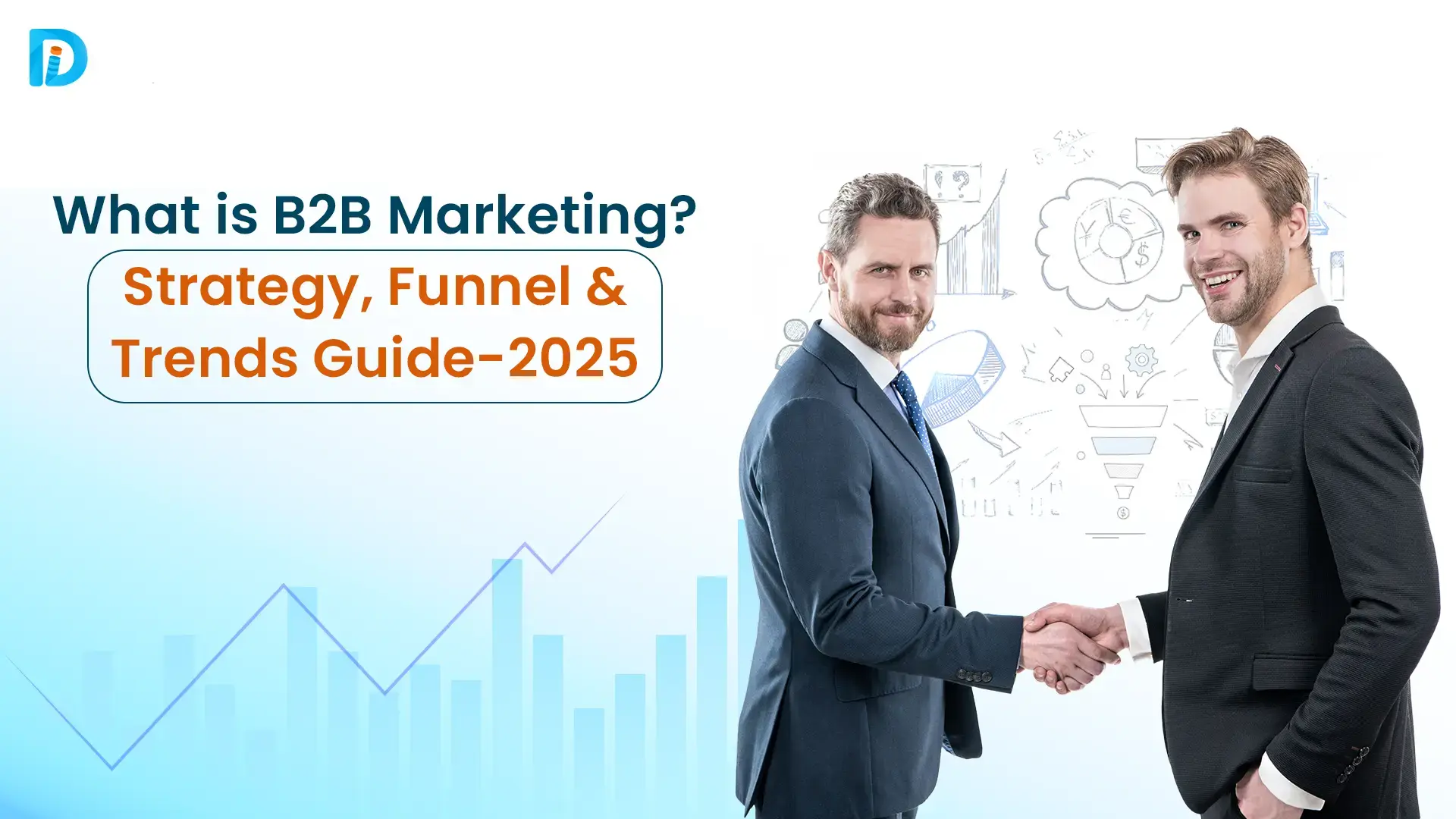
The B2B buying process now typically begins with a referral or an online search, with over 84% of decision-makers preferring this route. B2B marketing in 2025 has evolved into a personalized and data-driven approach that transforms complex buyer journeys into real-time business outcomes, rather than being cold emails and trade shows. With the introduction of AI integration, automation, and a remote work culture, B2B marketing has become one of the smartest ways to scale business operations and drive innovation across workflows. To set the context, take a look at the purchase journey in B2B Marketing All that being said, let's get into what exactly B2B Marketing is.
What is B2B Marketing?
In general, B2B marketing revolves around delivering value propositions targeted at other businesses, often to solve operational, technical, or scalability challenges. Unlike B2C, where emotion and immediacy drive conversions, B2B operates in a space where procurement cycles are longer, decision-making is multi-tiered, and ROI justifications are non-negotiable. Industry leaders like SAP, Zoho, and Slack exemplify this model through their SaaS-based ecosystems, offering platforms that integrate into existing workflows, boost cross-functional efficiency, and support everything from ERP to team collaboration. These companies don’t just sell software; they embed themselves into the core architecture of how modern businesses operate.How B2B Differs from B2C?
To better understand the efficiency, let’s compare and analyze the customer journeys involved and key differences in B2B and B2C.| Aspect | B2B Buying Journey (2025) | B2C Buying Journey (2025) |
|---|---|---|
| Trigger Point | Internal challenge, business need, or stakeholder referral | Personal need, lifestyle aspiration, or influencer/peer recommendation |
| Discovery Channel | Online search, peer referrals, LinkedIn, industry forums, content hubs | Social media, online ads, YouTube reviews, marketplaces |
| Research Process | Multi-team exploration of use cases, ROI, and long-term fit | Individual comparison of price, look, and features |
| Evaluation Criteria | Data, demos, product performance, case studies, integrations, compliance | Brand appeal, value for money, reviews, and delivery time |
| Decision-Makers | Cross-functional teams (e.g., Finance, IT, Ops, Legal, C-Suite) | Sole buyer (occasionally influenced by family/friends) |
| Sales Cycle | Long-term (weeks to months); includes onboarding and contract stages | Short-term (minutes to days); often impulsive |
| Personalization | Highly tailored content, nurture sequences, and account-based experiences | Targeted ads, algorithm-based recommendations |
| Technology Influence | AI-driven lead scoring, chatbots, automated CRMs, remote demos, and intent-based content | AI-driven product suggestions, voice search, AR try-ons |
| Post-Purchase Focus | Continuous support, SLA adherence, relationship management, and success metrics tracking | Quick support, return/refund options, loyalty offers |
| Business Outcome | Long-term ROI, operational efficiency, scalable transformation | Immediate satisfaction, lifestyle improvement, emotional gratification |
B2B Funnel Structure: Explained
Funnel in common explains the entire process of how a viewer turns into a loyal customer. To segregate how much closer they are getting towards our desired outcome, a funnel is segmented into 3 parts: Top-of-Funnel(ToFu), Middle-of-Funnel(MoFu), Bottom-of-Funnel(BoFu). Let’s now understand in detail about B2B Marketing Funnel.Top-of-Funnel:
ToFu is the awareness stage of the funnel, where a brand creates awareness and visibility. With the key elements being SEO-optimized pages, content marketing, webinars, and micro-content, a brand reaches a wider audience base, gathering the attention and recognition the brand needs. Speaking of numbers, 67% of B2B buyers go through multiple assets of a business before considering purchasing, hence making it essential to have an established online presence, which should also resonate with diverse but particular customer personas. Since ToFu is all about building a strong presence and earning authority over competitors, diversity in presence also becomes inevitable. Apart from the website, a brand needs social profiles like Instagram, Facebook, YouTube, professional platforms like LinkedIn, and User-Generated Content(UGC) platforms like Quora and Reddit. Running Ad Campaigns on Meta, LinkedIn, or Google might also help.Middle-of-Funnel:
MoFu is the consideration stage of the funnel, where a brand nurtures the initial interest by offering deeper insights and solutions. With the key elements being case studies, email sequences, gated content like whitepapers, and product explainers, a brand educates prospects while addressing their specific pain points and use cases. Speaking of numbers, 74% of B2B buyers say they choose the vendor that first provided value and insight during this stage, making it critical to be the early educator rather than the late seller. Since MoFu is all about trust-building and positioning the brand as a reliable problem-solver, value-driven, solution-specific content becomes the key. Apart from blog content, a brand needs to leverage nurture-focused email flows, in-depth webinars, how-to videos, and platform-native content on LinkedIn, YouTube, and even targeted Reddit threads. Drip marketing, remarketing ads, and curated sequences based on customer behavior also play a strong role here.Bottom-of-Funnel:
BoFu is the decision stage of the funnel, where a brand converts prospects into customers by offering final proof and reassurance. With the key elements being product demos, free trials, customer testimonials, and competitor comparison sheets, the brand helps buyers justify their final choice. Speaking of numbers, 82% of B2B decision-makers say that vendor trust and post-sale support influence their final decision, highlighting the need to focus on confidence-building touchpoints at this stage. Since BoFu is all about conversion and retention, frictionless access to decision-making material becomes essential. Apart from sales calls, a brand needs one-pagers, personalized demos, ROI calculators, pricing pages, and integration guides. Presence on G2, Capterra, or Trustpilot, and intent-driven search ads on Google or Bing can also accelerate final conversion. With the funnel journey laid out, let’s focus on the performance levers that make it work.
Performance-Based Channels for B2B Growth in 2025
Search Engine Optimization(SEO)
Modern-day SEO is well past ranking; it’s now a space to focus on intent and interactivity. A landing page is considered optimized only if it resonates with the prospects in the right stage of the funnel. Say, one of your pages displays product details and pricing directly to a new prospect. Will that make them consider purchasing? An SEO-friendly page means content that speaks, UI/UX that's readable and stands out, and is technically well-optimized. Advanced SEO strategies deciding the ranking are page speed, CTAs, structured content architecture, topic clusters, schema markups, and ICP-aligned keyword mapping. And, keywords just don't fall off the keyword planner and SEMrush. Every keyword must be closely related and capable of bringing in traffic, which means it should be intent-based, so that prospects search for it.Email and CRM
Today’s email marketing, rather than being about open rates, is about relevance, timing, and automation that still has a personalized touch. A workflow is considered efficient only when every message feels like it was meant for that specific lead at that exact time. An optimized CRM and email setup includes behavior-triggered flows, personalized subject lines, mobile-first design, and deep segmentation. Real performance lies in dynamic content, lifecycle-based campaigns, re-engagement triggers, and automation that mirrors the actual customer journey. And no, templates don’t convert on their own. Every email must earn its spot, driven by user behavior, intent signals, and continuous A/B testing.Ads and Retargeting
Paid advertising in 2025 is about pulling attention with precision rather than pushing creatives. An ad only delivers ROI when it speaks to the user’s current mindset. Just like serving a hard-sell CTA to someone who just discovered your brand? It won’t land. Optimized ad performance now depends on audience segmentation, funnel-aware messaging, compelling ad copy, and thumb-stopping visuals. Key tactics include intent-based keyword bidding, custom retargeting journeys, dynamic product ads, and channel-native formats like LinkedIn lead-gen or YouTube pre-rolls. And no, ad budgets don’t work without strategy. Every campaign must be mapped to a funnel stage, with creative and copy tailored to move the user one step closer to conversion.The Emerging Trend in B2B Marketing
While the concept of B2B has been the same since it was introduced, it has evolved to a relatively superior position in 2025. Let's look at the B2B trends to watch out for in 2025The Rise of AI
The evolution of AI has diversified into 2 new aspects, with one being SGE (Search Generative Experience) and the other being AI Assistant. This, in turn, has made conversion easier by making it hassle-free for the prospects to reach the right businesses. On top of that, 61% of B2B marketers say AI tools have significantly improved their content productivity in 2025.SGE (Search Generative Experience)
Since the introduction of chatbots like ChatGPT, DeepSeek AI, and Copilot, analysts have noticed a shift in the way people search for things on the internet. Particularly, decision makers who usually have relatively tight timing constraints use these AI tools to find the right products or services to purchase. So this makes it necessary for any business to have an SGE (Search Generative Experience) Presence to ensure that they aren’t left in the dust. Also, AI search results are heavily based on Google indexing and customer reviews on the internet, making it crucial for product/service providing businesses to have a reputable online presence.AI Assistant
Businesses in 2025 tend to lean towards chatbots capable of answering prospects’ questions in multiple languages, at any time, rather than having a team of human assistants. This also indicates the opportunity for service providers to integrate AI Chatbots into their websites and on their service list.Micro Contents over Long Reports
The run for attention is getting real. 2024 and 2025 have been fast-paced as prospects now tend to lose patience to look at long-form content, understand, and then make a decision based on it. In fact, 73 out of every 100 B2B decision-makers prefer short-form videos or infographics over full-length reports when evaluating solutions. Short videos, infographics, and podcast clips that start with a catchy hook are shared and valued more than generic and boring long-form content.Content Experience Design (CX Design)
With tech being accessible to almost everyone, it has become really complicated to stand out from the competition. Here’s exactly where CX Design comes into play. Though tech has become accessible, only a few can pull off an impressive and usable interface that has interactive content in it. User interactive content like ROI Calculators, Dynamic Solution Finders, and Quiz Tools is often used to stay unique and keep the users going through the funnel subconsciously. Finders, and Quiz Tools is often used to stay unique and keep the users going through the funnel subconsciously.Conclusion
In conclusion, B2B Marketing has evolved into a stand-alone ecosystem rather than being a support system. With the right tech and strategy, B2B brands can now scale their businesses above and beyond the competition. All that being said, creating a fully functional and high-conversion B2B strategy means more than aligning content to funnel stages. It’s about precision across demand gen, lead scoring, and multi-channel attribution. When ICP mapping, intent signals, and retargeting flows work in sync, the strategy doesn’t just perform, it compounds.FAQ
What is B2B marketing in one line?
It’s the strategy of promoting solutions from one business to another using value-driven communication.
Best channels for B2B in 2025?
LinkedIn, email automation, SEO, and ABM-powered retargeting.
What’s the biggest challenge?
Attribution, cross-team alignment, and adapting to first-party data models.
Thought Leadership & GTM Strategy
The Shift to Technographic & Installed Base Intelligence
In today's B2B marketing environment, broad unsegmented email outreach yields low deliverability and high opt-out rates. Modern revenue leaders build targeted campaigns by analyzing exact software deployment footprints—mapping C-Suite budget approvers, IT leads, and system architects.