




10 Best B2B Technographic Data Providers in USA
Explore the top 10 B2B technographic data providers in the USA and learn which provider fits your GTM strategy, ABM programs, and lead generation goals.
By Olivia Thomas, Director of Growth Marketing & Sales at Data InfoMetrix
Not all technographic data providers solve your every problem.
Some help sales teams find companies using specific technologies. Others support enterprise account research, competitor conquesting, ABM, or territory expansion across the U.S. market.
As buying journeys become increasingly digital, technographic data intelligence has become a critical part of modern GTM strategies.
Gartner reports that B2B buyers spend only 17% of their purchasing journey meeting with suppliers, making it more important than ever to identify opportunities before conversations begin.
So before comparing providers, it's worth asking a more important question:
“What do you want technographic data to help your team accomplish?”
Not Every Provider Solves the Same Problem
Most comparison articles evaluate providers against the same checklist. The reality is that GTM teams don't all use technographic data in the same way.
An ABM team prioritizing strategic accounts has very different requirements from an SDR team building outbound lists or a product marketer analyzing competitive adoption trends.
The goal matters because the best B2B technographic data provider for account research may not be the best one for prospecting, audience activation, or territory expansion.
Finding the Best Technographic Data Platforms for B2B Targeting
| GTM Challenge | Best-Fit Provider(s) | Why It Fits |
|---|---|---|
| Competitor Conquesting, Outbound Sales, Lead Generation, and ABM | Data InfoMetrix | Combine technology intelligence with audience targeting and prospecting workflows. |
| Outbound Prospecting | ZoomInfo, Apollo, Data InfoMetrix | Connect technographic insights with contact data and sales outreach. |
| Account-Based Marketing | 6sense, Demandbase, Data InfoMetrix | Prioritize, segment, and engage high-value accounts. |
| Enterprise Account Research | HG Insights, 6sense | Understand technology environments, account signals, and enterprise buying landscapes. |
| Competitive Displacement | Data InfoMetrix, HG Insights, BuiltWith | Identify users of competing technologies and replacement opportunities. |
| Technology Migration Campaigns | Data InfoMetrix, HG Insights, TheirStack | Discover organizations likely to evaluate alternatives during technology transitions. |
| Product Marketing Research | TheirStack, Coresignal, BuiltWith | Analyze technology adoption trends, competitive positioning, and market opportunities. |
| Territory Expansion | Data InfoMetrix, ZoomInfo | Identify technology-based market segments and new growth opportunities. |
| Integration Targeting | Data InfoMetrix, BuiltWith, Wappalyzer | Discover complementary technology ecosystems and integration opportunities. |
| Website Technology Analysis | BuiltWith, Wappalyzer | Detect and analyze public-facing technology stacks. |
The right technographic data provider depends on which of these outcomes matters most to your GTM strategy.
And once the objective is clear, provider selection becomes much easier.
Top 10 B2B Technographic Data Providers in USA
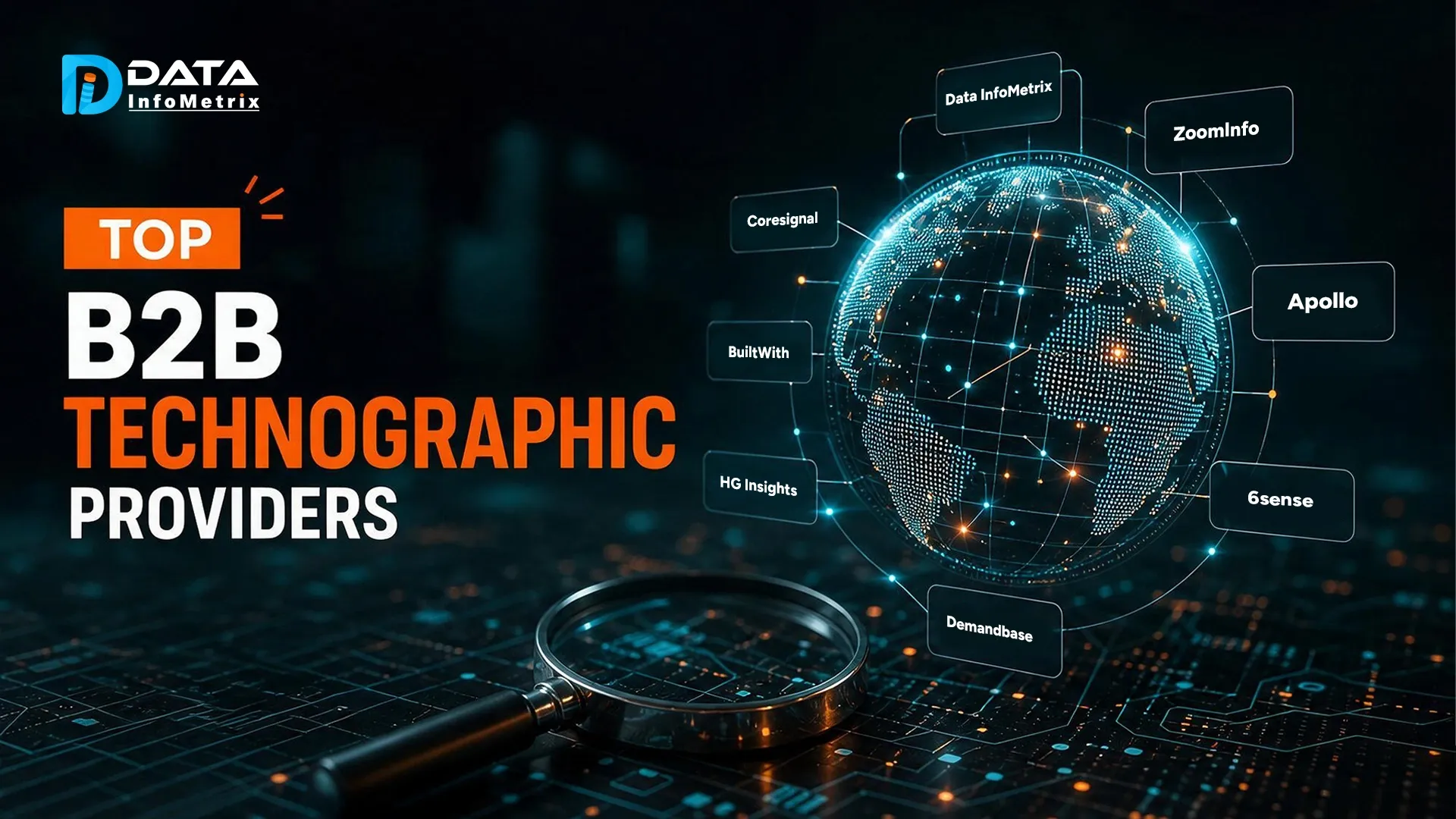
Here are the top B2B technographic data providers in the United States:
- Data InfoMetrix – Best for audience activation, prospecting, and custom installed base targeting
- BuiltWith – Best for website technology detection & digital market research
- ZoomInfo – Best for enterprise contact intelligence & integrated sales prospecting
- 6sense – Best for intent-driven account prioritization & ABM orchestration
- Demandbase – Best for full-funnel account-based marketing & personalization
- TheirStack – Best for technology adoption signals & market research
- Wappalyzer – Best for instant web technology inspection & browser lookup
- HG Insights – Best for deep IT spend intelligence & enterprise market planning
- Coresignal – Best for raw developer APIs, data enrichment & analytics
- Apollo – Best for accessible sales outreach & integrated sequencing
Let's explore further!
1. Data InfoMetrix
Since I work closely with Data InfoMetrix, it's important to acknowledge that relationship upfront.
What differentiates the platform is its focus on turning technology intelligence into targetable audiences.
Rather than stopping at technology discovery, Data InfoMetrix combines technographic data with firmographics, buying signals, and contact intelligence to help teams identify and activate opportunities across outbound sales, account targeting, co-selling, and market research.
| Notable Capabilities | Considerations |
|---|---|
| Combines technographic, firmographic, and contact intelligence | Best suited for teams focused on audience activation and prospecting |
| Supports CRM, ERP, fintech, billing, and other software-focused targeting | Data requirements vary depending on campaign goals |
| Useful for lead generation, ABM, territory expansion, and competitor conquesting | Enterprise projects may require custom datasets |
Pricing: Data InfoMetrix’s pricing plans vary by segmentation, customization needs, data size, signal add-ons, or special requests.
2. BuiltWith
BuiltWith specializes in website technology detection and remains one of the most widely recognized tools for analyzing publicly visible technology stacks.
It is commonly used by marketers, researchers, agencies, and sales teams looking to understand web technology adoption across markets and competitors.
| Strengths | Considerations |
|---|---|
| Extensive website technology detection | Limited visibility into internal enterprise systems |
| Useful for digital market research | Primarily focused on web-facing technologies |
| Easy technology segmentation | Less suitable for deep account intelligence |
Pricing: BuiltWith provides publicly available subscription plans, with pricing based on access levels, reporting needs, and technology intelligence requirements.
3. ZoomInfo
ZoomInfo combines company intelligence, buyer contacts, and technographic insights within a single prospecting workflow.
For many sales organizations, identifying a technology is only part of the equation. Reaching the right decision-makers often determines whether that intelligence turns into a pipeline.
| Strengths | Considerations |
|---|---|
| Large contact database | Premium pricing compared to many alternatives |
| Technology and buyer intelligence in one platform | Advanced capabilities may require higher-tier plans |
| Strong prospecting workflows | Maybe more than some teams need for pure technographic research |
Pricing: ZoomInfo offers customized pricing based on selected products, user seats, data access, and platform capabilities.
4. 6sense
6sense uses technographic data as part of a broader account intelligence framework. Its value comes from helping teams decide where to focus rather than simply showing which technologies an account uses.
| Strengths | Considerations |
|---|---|
| Strong account prioritization capabilities | Best suited for mature GTM organizations |
| Combines multiple account signals | Implementation may require cross-functional adoption |
| Supports ABM initiatives | Often works best within larger account-based programs |
Pricing: 6sense provides custom enterprise pricing based on platform modules, account coverage, and go-to-market requirements.
5. Demandbase
Demandbase is designed for organizations running account-based go-to-market programs. Technographic insights support segmentation, targeting, and personalization efforts across target accounts.
| Strengths | Considerations |
|---|---|
| Established ABM platform | More valuable for account-based strategies than broad prospecting |
| Strong segmentation capabilities | Can be complex for smaller teams |
| Supports account activation and personalization | Requires organizational alignment to maximize value |
Pricing: Demandbase uses custom pricing that varies based on account-based marketing requirements, platform configuration, and organizational scale.
6. TheirStack
TheirStack focuses on technology adoption intelligence across companies and markets. It is often used for research-oriented initiatives rather than direct prospecting alone.
| Strengths | Considerations |
|---|---|
| Technology adoption analysis | Less outreach-focused than prospecting platforms |
| Useful for market and competitive research | May require additional tools for activation |
| Supports ecosystem mapping | Not primarily designed for sales engagement |
Pricing: TheirStack offers quote-based pricing, with costs depending on data access requirements and usage needs.
7. Wappalyzer
Wappalyzer offers a simple way to identify technologies used on websites. It is frequently used by marketing research professionals, SDRs, and growth teams looking for quick visibility into digital stacks.
| Strengths | Considerations |
|---|---|
| Fast technology detection | Limited enterprise technology visibility |
| Easy to use | Focused on public-facing technologies |
| Accessible for quick research | Less comprehensive than enterprise-focused platforms |
Pricing: Wappalyzer offers both free and paid plans, with pricing determined by feature access, usage limits, and API requirements.
8. HG Insights
HG Insights is best known for enterprise technology intelligence.
The platform combines technographic insights with broader visibility into IT environments. This enables organizations to understand technology adoption patterns, infrastructure investments, and strategic account opportunities.
For enterprises pursuing complex account planning initiatives, that additional context can be particularly valuable.
| Strengths | Considerations |
|---|---|
| Deep enterprise technology intelligence | Primarily geared toward enterprise use cases |
| Useful for strategic account planning | May be more robust than some SMB teams require |
| Strong account research capabilities | Often used alongside larger GTM programs |
Pricing: HG Insights offers custom pricing tailored to an organization's technology intelligence, market planning, and revenue team requirements.
9. Coresignal
Coresignal is often evaluated by teams building custom intelligence workflows, analytics projects, and data-driven GTM programs. Its API-first and raw-data approach makes it attractive to organizations with internal data capabilities.
| Strengths | Considerations |
|---|---|
| Structured datasets and APIs | Requires data operations resources |
| Useful for enrichment and analytics | Not a traditional prospecting platform |
| Supports custom intelligence projects | May be less accessible for non-technical teams |
Pricing: Coresignal provides custom pricing based on dataset selection, API access, data volume, and business requirements.
10. Apollo
Apollo combines prospecting functionality with company intelligence, including technographic attributes. For many sales teams, it provides a practical way to incorporate technology-based targeting into everyday outreach workflows.
| Strengths | Considerations |
|---|---|
| Integrated prospecting workflows | Technographics are one part of a broader sales platform |
| Accessible pricing structure | Less focused on deep enterprise technology intelligence |
| Popular among SDR and sales teams | May not satisfy advanced research requirements |
Pricing: Apollo offers tiered subscription plans, including free and paid options, with pricing based on users, credits, and feature access.
Red Flags to Watch for Before Choosing a Technographic Data Provider
The right provider can accelerate growth. The wrong one can create noise, wasted budget, and missed opportunities. There are a few red flags to watch for before investing in a B2B technographic data provider.
Over the years, I've noticed that most GTM teams don't fail because they lack data. They struggle because they invest in data that doesn't align with how they actually go to market.
Before evaluating database size, technology coverage, or pricing, I recommend looking for a few warning signs that often create problems later in the buying process:
🚩 1. The Provider Can Show Technology Installs, But Not Revenue Opportunities
The platform can tell you who uses a technology, but cannot identify which accounts align with your ICP, territory strategy, or pipeline goals. Technology visibility alone rarely translates into revenue.
🚩 2. The Data Supports Research, But Not Execution
The intelligence looks valuable in reports and dashboards but cannot be easily activated by sales, ABM, product marketing, or RevOps teams. Insight without execution creates friction, not growth.
🚩 3. The Provider Doesn't Match Your GTM Motion
The platform is popular in the market, but its strengths don't align with how your GTM team actually goes to market. A provider built for enterprise account research may not support outbound prospecting, and vice versa.
🚩 4. The Platform Cannot Help You Identify Technology Change
The provider only shows current technology installs with little visibility into migrations, replacements, or technology shifts. Often, the biggest opportunities emerge when technology environments are changing.
🚩 5. The Vendor Focuses on Volume Instead of Relevance
The sales pitch revolves around database size rather than opportunity quality. More records do not automatically mean better targeting, a stronger pipeline, or higher conversion rates.
🚩 6. There Is No Clear Path From Technographics to Buying Committees
The platform identifies accounts but offers limited visibility into decision-makers, influencers, or buying teams. Without a path to the right stakeholders, valuable insights can remain unused.
🚩 7. Every Technology Signal Is Treated Like Purchase Intent
The provider assumes every technology install represents an active buying opportunity. Technology adoption is useful context, but without additional buying signals, it can lead teams toward false positives.
Know Which Companies Are Already Using the Technology You Sell?
Data InfoMetrix builds custom technology-user lists around technographics, firmographics, buying signals, and verified decision-makers, so your GTM team can target the accounts that actually fit.
Build My Target List! →Final Thoughts
There’s no single B2B technographic data provider that solves every GTM challenge. The right choice depends on what your team needs to accomplish.
For competitor conquesting, legacy modernization, integration ecosystem, and co-selling, Data InfoMetrix can help turn intelligence into actionable opportunities.
For enterprise technology research and account intelligence, HG Insights is a strong fit, while ZoomInfo and Apollo support prospecting and lead generation.
6sense and Demandbase are well-suited to account-based GTM programs, while BuiltWith and Wappalyzer work well for discovering publicly visible website technologies.
Ultimately, choose the provider that matches your GTM motion, not simply the largest database.
Frequently Asked Questions
What is a B2B technographic data provider?
A B2B technographic data provider collects and delivers information about the technologies companies use, helping sales, marketing, and GTM teams identify potential opportunities.
Why is technographic data important for lead generation?
Technographic data helps organizations target companies that already use relevant technologies, making prospecting and segmentation more precise.
Which technographic data provider is best for sales teams?
The answer depends on the sales motion. Teams focused on technology-based audience building may prefer Data InfoMetrix, while teams seeking integrated prospecting workflows may evaluate platforms like ZoomInfo or Apollo.
How is technographic data used in ABM?
ABM teams often use technographic data to identify high-fit accounts, personalize outreach, segment audiences, and prioritize target accounts.
 Written byOlivia ThomasDirector of Growth Marketing & Sales
Related articles

Inside the 2026 Executive Research Series: Announcing 4 Comprehensive eBooks and 4 Empirical Whitepapers on B2B Installed Base Intelligence
Data InfoMetrix releases its landmark 2026 Executive Research Series: 4 tactical eBooks and 4 empirical Whitepapers providing research-backed benchmarks on technographic data decay, legacy migration cycles, and account selection.
Olivia Thomas · 9 min read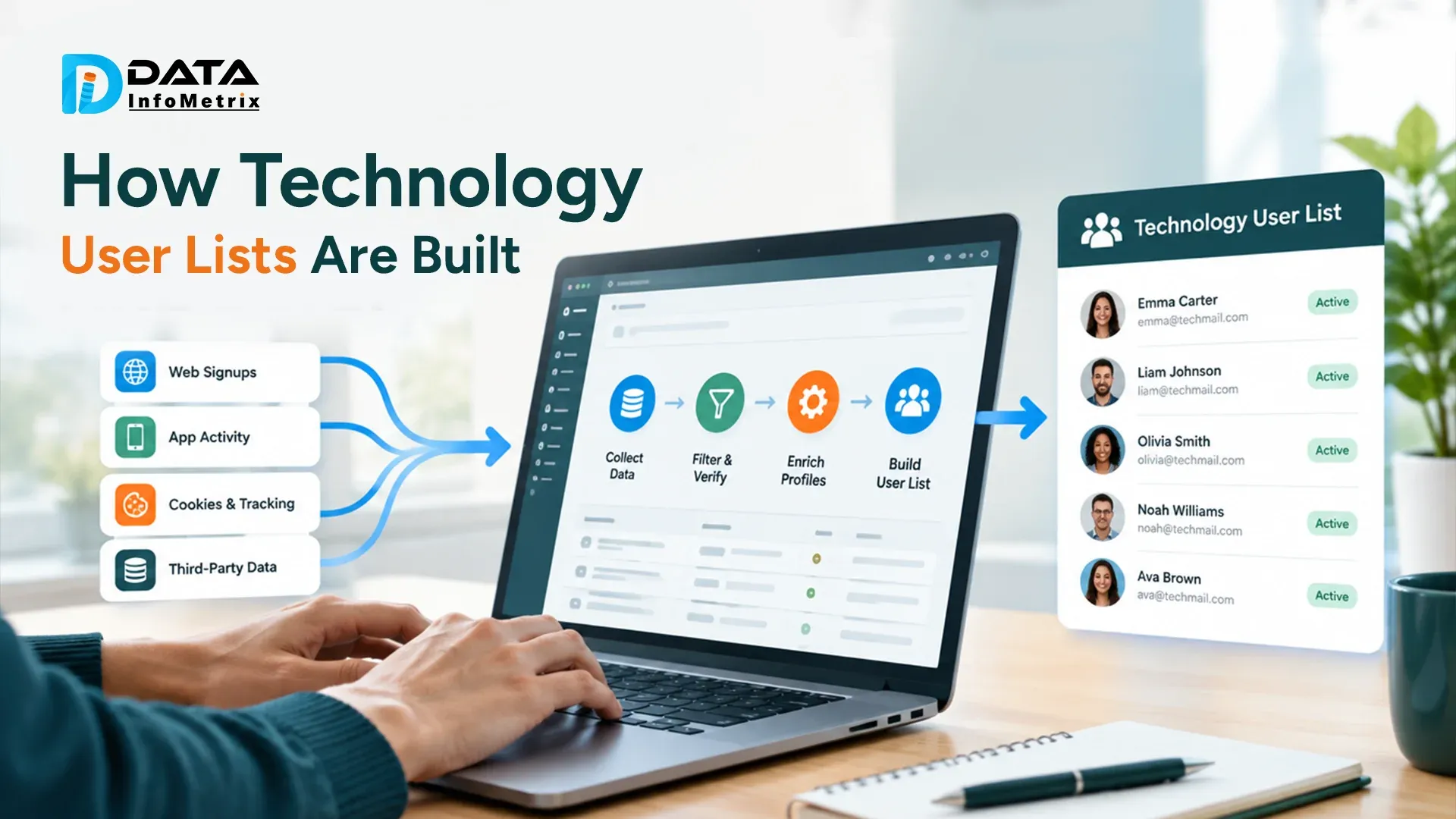
How Data InfoMetrix Builds and Delivers a Technology Users Email List
Learn how Data InfoMetrix builds technology users email lists using technographics, business signals, verification, and market intelligence.
Olivia Thomas · 4 min read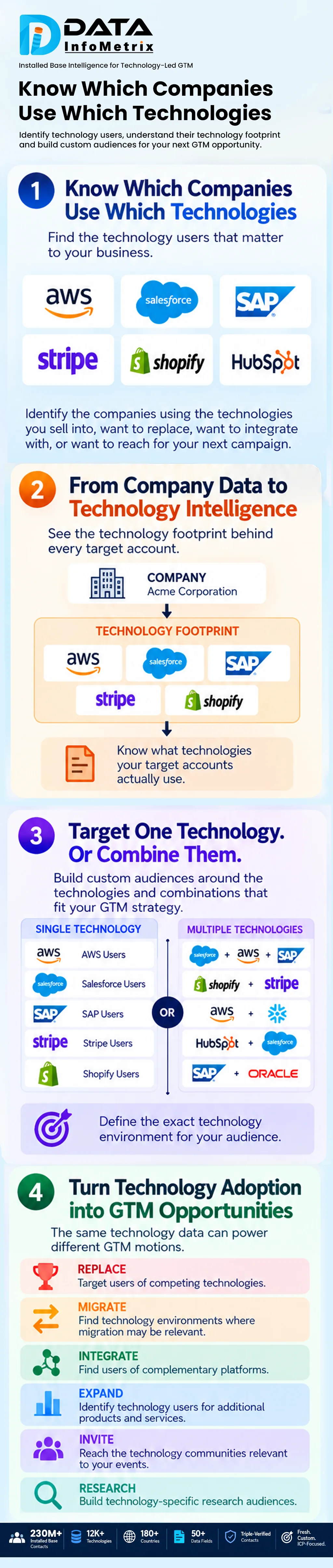
Know which Companies Uses Which Technologies
Know which companies use which technologies to target key B2B buyers. Access verified technographic data & contact lists. Claim your free sample today!
Olivia Thomas · 1 min read