




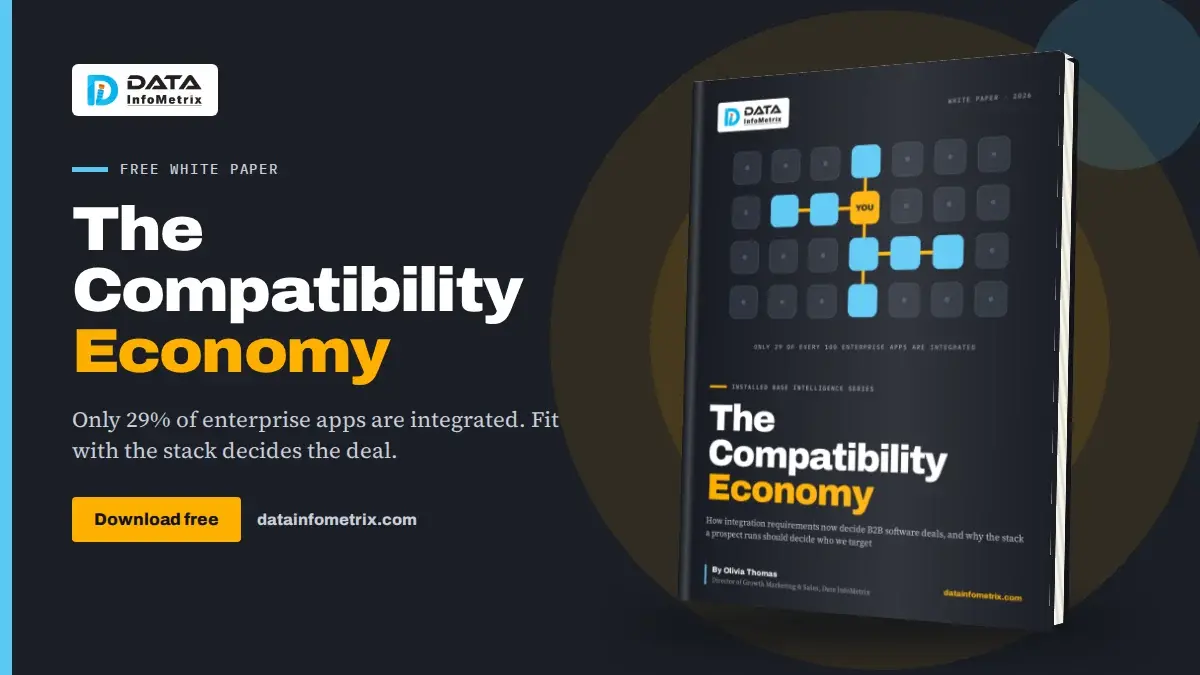
The Compatibility Economy: How Integration Requirements Now Decide B2B Software Deals
How integration requirements now decide B2B software deals, and why the stack a prospect runs should decide who we target.
 Olivia ThomasDirector of Growth Marketing & Sales, Data InfoMetrix
Download the free whitepaper
Enter your details to receive the complete 19-page PDF in your inbox and start reading right away.
What this whitepaper covers
B2B software is no longer bought on standalone feature lists alone. In modern enterprise environments, software is evaluated primarily on how seamlessly it fits the technology stack a company already operates. In G2’s survey of over 1,700 software decision-makers, over 80% ranked integration with existing solutions as a critical buying factor—ranking ease of integration above price.
In this incisive 19-page whitepaper, Olivia Thomas breaks down the mechanics of "The Compatibility Economy." Discover why enterprise integration debt causes deals to stall, how incompatibility sits behind the majority of software buyer regret, and why product integrations are the strongest empirical predictor of customer retention and net revenue retention (NRR).
Learn how to construct a 4-tier Compatibility Map, score target accounts on stack fit, and craft messaging that opens with your prospect’s confirmed installed systems to drive 3x higher outbound engagement.
Key findings
Buyers Judge Software by What It Connects To
How integration capabilities evolved from an implementation detail into the primary gating factor in B2B sales.
The Integration Gap Inside Every Account
With enterprises running an average of 1,000+ apps and only 29% integrated, data silos paralyze operations.
Integrations Drive Retention & Expansion
Why customer accounts with deep stack integrations show dramatically higher retention rates and expansion velocity.
Scoring Accounts on Stack Compatibility
A quantitative scoring framework for grading target accounts based on their active tech stack overlap.
Inside the whitepaper
01Buyers Now Judge Software by What It Connects To
The transformation of B2B procurement: why stack compatibility surpasses standalone feature sets.
02The Integration Gap Inside Every Account
Analysis of the modern app sprawl (1,000+ cloud applications) and the enterprise integration deficit.
03Incompatibility Is a Leading Cause of Regret
Why failed integrations drive software shelfware, customer dissatisfaction, and post-purchase churn.
04Integrations Keep and Grow Customers
The direct statistical relationship between active stack integrations and Net Revenue Retention (NRR).
05Ecosystems and Marketplaces Now Carry the Deal
How Salesforce AppExchange, AWS Marketplace, and HubSpot App Marketplace dominate enterprise sourcing.
06Why Firmographic Targeting Can’t See Compatibility
The fundamental blindspot of traditional firmographic databases in evaluating technical feasibility.
07The Compatibility Map: Four Tiers of Fit
Methodology for segmenting accounts into Tier 1 (Native Core), Tier 2 (Supported Stack), Tier 3 (API Custom), and Tier 4 (Incompatible).
08Three Compatibility Plays
Actionable outreach playbooks built on proven stack fit: Ecosystem Launch, Complementary Extension, and Friction Relief.
09Messaging That Starts with Their Stack
Cold outreach copywriting formulas that mention the prospect’s confirmed software stack in the opening line.
10How Data InfoMetrix Builds Compatibility Audiences
How multi-vector technographic telemetry enables precision filtering across 900+ enterprise software platforms.
Who should read it
Product Marketing & GTM Strategy Heads
Align product integrations with sales messaging and build campaigns centered on verified ecosystem compatibility.
VPs of Growth & Demand Generation
Eliminate out-of-ICP accounts and generate qualified opportunities with prospects running supported systems.
Alliances & Business Development Directors
Map overlapping customer accounts with platform partners (Salesforce, Microsoft, AWS) to scale co-selling.
Chief Revenue Officers & Sales VPs
Accelerate deal velocity and shorten enterprise sales cycles by confirming technical feasibility before discovery calls.
About the authorOlivia ThomasOlivia Thomas heads growth marketing and sales intelligence strategy at Data InfoMetrix, partnering with enterprise software vendors, high-growth SaaS scaleups, and systems integrators to build precision installed-base audiences that drive predictable pipeline.Questions, answered
What is the Compatibility Economy?
The Compatibility Economy describes the modern B2B market environment where buyers prioritize how well a new software product connects to and enhances their existing systems of record over isolated feature lists.
Why does firmographic data fail to predict software fit?
Firmographics tell you a company’s employee headcount and revenue, but provide zero visibility into whether that company operates the ERP, CRM, or cloud environment required for your software to function.
How can Data InfoMetrix help identify compatible accounts?
Data InfoMetrix allows B2B revenue teams to filter prospective accounts by their verified technology stack—combining must-have systems and excluding incompatible legacy tools across 900+ platforms.
Put the research to work
Get the PDF free, or ask us for a sample of the installed base it describes.
More whitepapers
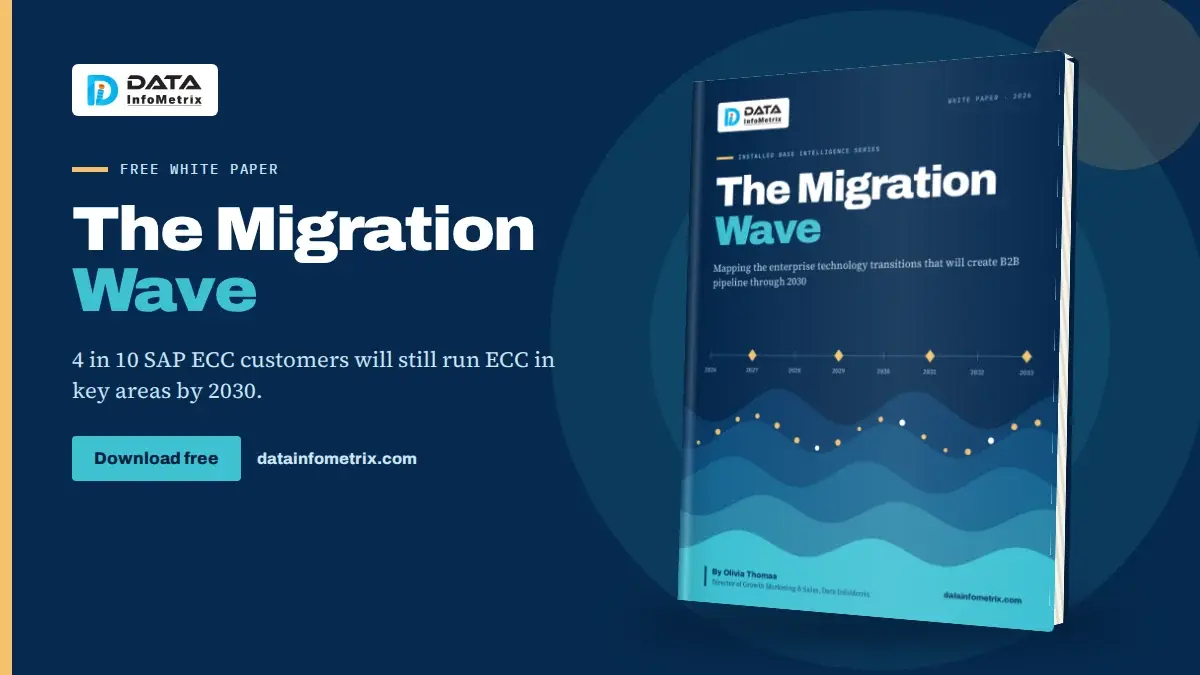
The Migration Wave
Mapping the enterprise technology transitions that will create B2B pipeline through 2030.
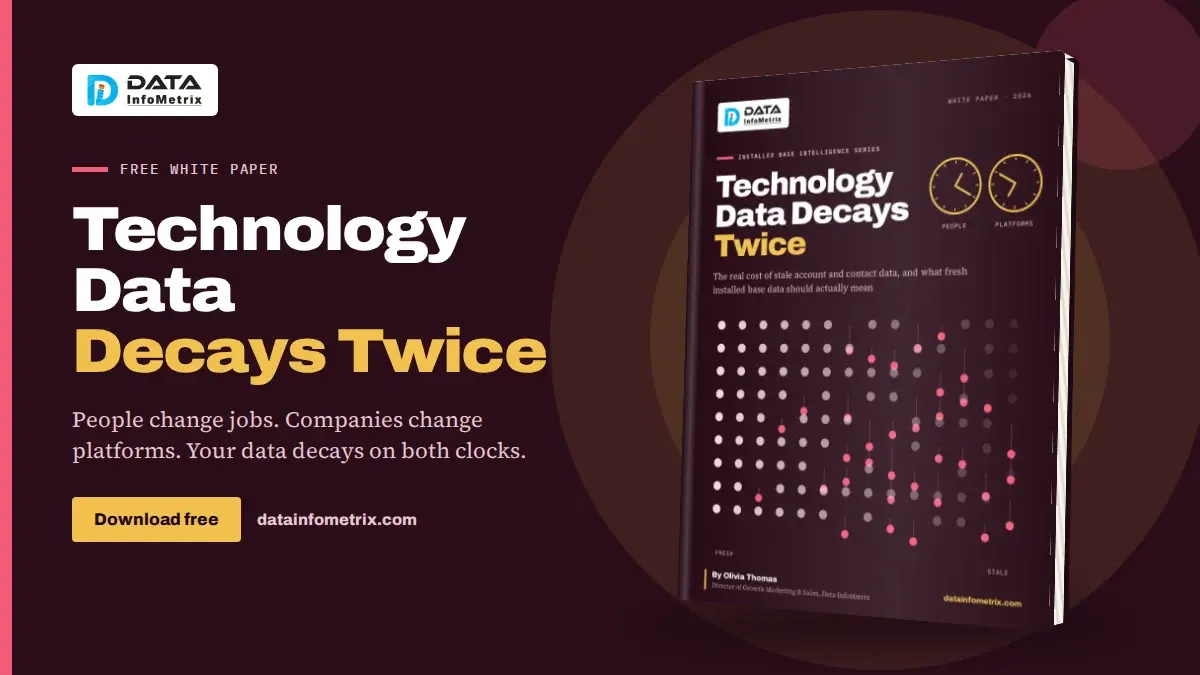
Technology Data Decays Twice
The real cost of stale account and contact data, and what fresh installed base data should actually mean.
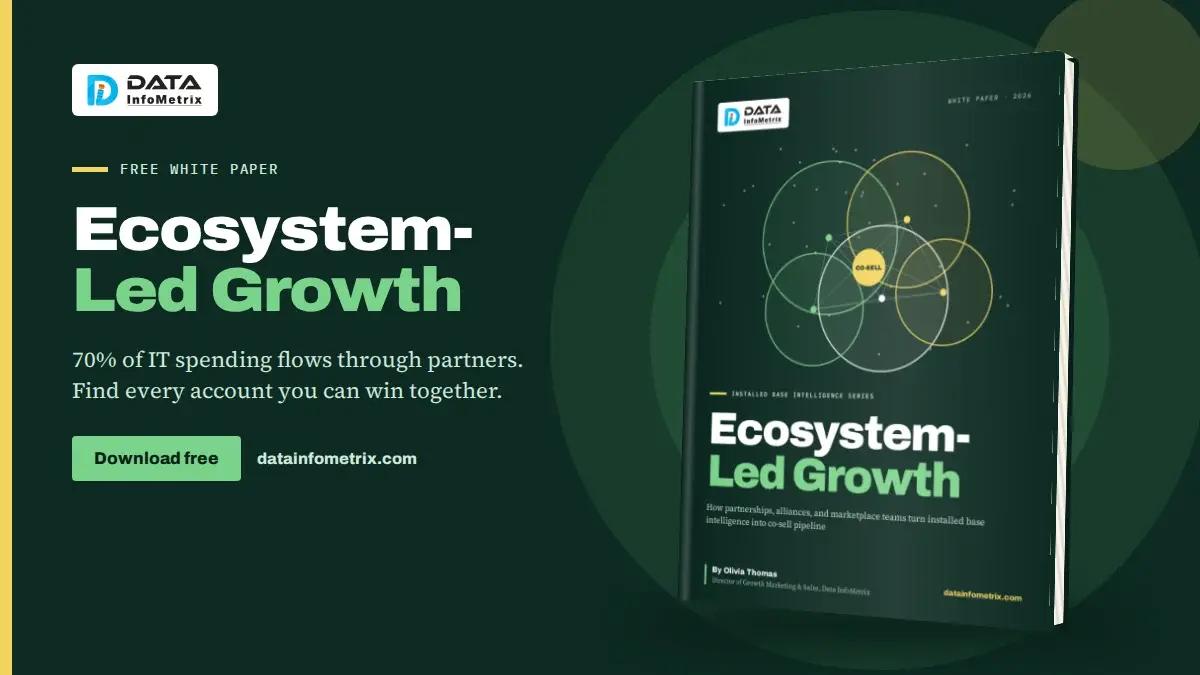
Ecosystem-Led Growth
How partnerships, alliances, and marketplace teams turn installed base intelligence into co-sell pipeline.